


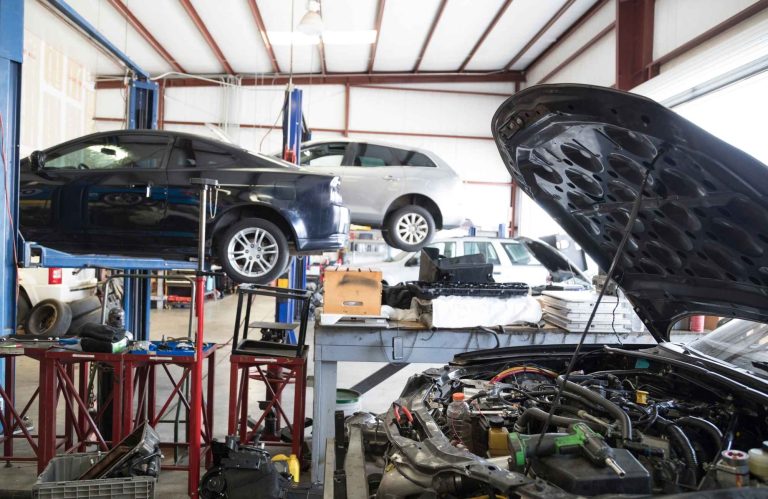
Running an auto repair shop involves more than fixing cars; it means managing employees, customers, and compliance with dozens of payroll laws. Between overtime pay, flat-rate systems, worker classification, and evolving tax rules, even one payroll mistake can lead to fines or audits. For small business owners, payroll compliance can feel overwhelming, but it doesn’t have to be.
Auto repair payroll compliance ensures every technician and staff member is paid correctly, taxes are filed on time, and accurate records are kept. The challenge lies in managing multiple pay types (hourly, flat-rate, and contract) while still focusing on customer satisfaction and repairs. That’s where FRIDAY’s Payroll Software for Auto Repair Shops comes in, automating calculations, filing taxes, and keeping your business fully compliant without the stress.
What Payroll Compliance Means for Auto Repair Shops
Payroll compliance refers to following every labor and tax law that governs how employees are paid. For auto repair shops, that includes:
- Adhering to the Fair Labor Standards Act (FLSA)
- Paying at least minimum wage
- Calculating overtime correctly
- Withholding payroll taxes
- Maintaining accurate time and pay records
Shops often use flag-rate or flat-rate pay systems, compensating technicians per completed job instead of hourly work. Even then, each worker’s weekly average must still meet minimum wage requirements, and all hours worked must be recorded.
In short, auto repair payroll compliance ensures fair pay, correct overtime, and accurate reporting, critical for both legal protection and employee trust.
Why Payroll Compliance Matters for Small Auto Shops
For small repair businesses, noncompliance isn’t just risky, it’s expensive. The Department of Labor (DOL) can impose thousands in back pay, fines, and legal fees. And beyond penalties, incorrect payroll can cause major staff dissatisfaction.
Here’s why staying compliant pays off:
- Avoid fines and audits: FLSA and IRS penalties can devastate small shops.
- Improve retention: Employees stay when paychecks are accurate and on time.
- Build credibility: Customers trust compliant, ethical businesses.
If your shop has both employees and contractors, FRIDAY Payroll for Contractors lets you manage everyone in one place. From W-2s to 1099s, you can handle taxes, track payments, and stay compliant effortlessly.
Key Payroll Laws Auto Repair Shops Must Follow
Auto repair businesses must follow a mix of federal and state laws. Here’s what to keep top of mind:
| Payroll Requirement | What It Means | Compliance Tip |
| Minimum Wage | Pay at least the federal minimum ($7.25/hr) or your state’s higher rate. | Check weekly earnings for flat-rate techs to ensure compliance. |
| Overtime Pay | 1.5× the regular rate after 40 hours/week for non-exempt employees. | Include bonuses and spiffs in the regular rate. |
| Employee Classification | Distinguish between W-2 employees and 1099 contractors. | Misclassification leads to IRS penalties; when unsure, classify as an employee. |
| Payroll Taxes | Withhold income, Social Security, and Medicare taxes. | Automate with FRIDAY to avoid missed payments. |
| Recordkeeping | Keep time, pay, and deduction records for at least three years. | Use FRIDAY Docs and Forms for secure storage. |
Following both federal and state laws, and applying whichever favors employees most, is the key to full compliance.
How to Calculate Overtime for Flat-Rate Technicians
Flat-rate systems simplify pay but complicate overtime. Under the FLSA, all non-exempt employees still qualify for overtime based on their “regular rate.”
Example:
A flat-rate tech earns $900 for 45 hours in one week.
- Regular rate = $900 ÷ 45 = $20/hour
- Overtime = 0.5 × $20 × 5 = $50
- Total pay = $950
Manually running these numbers for multiple employees is time-consuming. FRIDAY automatically calculates overtime for each technician, so every pay period is accurate, compliant, and stress-free.
Common Payroll Compliance Mistakes Auto Shops Make
Even diligent shop owners can fall short on compliance. Here are the most common mistakes:
- Misclassifying workers to avoid payroll taxes.
- Ignoring downtime or non-productive hours.
- Failing to include bonuses or commissions in overtime.
- Missing payroll tax deadlines.
- Not maintaining detailed pay and time records.
Each of these can lead to violations under the Fair Labor Standards Act. FRIDAY eliminates these risks by automating time tracking, payroll processing, and tax filings, all backed by audit-ready reporting.
Step-by-Step Payroll Compliance Checklist
Follow this simple five-step plan to maintain compliance year-round:
- Classify workers correctly. Identify which staff are W-2s and which are legitimate 1099s.
- Track all hours worked. Include downtime and prep periods.
- Verify overtime pay. Apply 1.5× pay to all non-exempt employees.
- Automate payroll taxes. Ensure timely federal and state filings.
- Conduct quarterly audits. Review pay records for accuracy.
Each of these steps can be automated using FRIDAY’s Auto Repair Payroll Software, saving you hours every week while ensuring 100% compliance.
Adapting to Changing Payroll Regulations
Labor laws evolve constantly. Many states now update minimum wages annually or introduce new leave policies. For auto repair shops with locations in different states, compliance becomes even trickier.
FRIDAY automatically updates tax tables, rates, and forms, keeping your system aligned with the latest laws. You can also check the Employer Registration by State guide to confirm requirements for multi-state operations.
FRIDAY vs. Other Payroll Solutions
Not all payroll platforms are designed for the auto repair industry. Here’s how FRIDAY compares to two of the most common alternatives:
| Feature | FRIDAY Payroll | QuickBooks Online | ADP |
| Built for Auto Repair Shops | ✔ Yes | ✖ General business only | ✖ General business only |
| Flat-Rate Tech Overtime Calculation | ✔ Automated | ⚠️ Manual setup | ⚠️ Manual setup |
| Contractor + Employee Management | ✔ Unified dashboard | ⚠️ Separate modules | ✔ Available, higher cost |
| State and Federal Tax Filing | ✔ Automatic | ✔ | ✔ |
| Custom Pay Schedules | ✔ Unlimited | ⚠ Limited | ⚠ Limited |
| Pricing Transparency | ✔ Flat monthly rate | ✖ Tiered pricing | ✖ Quote-based |
| Integration with Accounting Tools | ✔ QuickBooks, Xero | ✔ Built-in | ⚠ Limited |
| Free Trial | ✔ 14 Days | ✖ None | ✖ None |
FRIDAY provides auto repair shops with payroll automation specifically tailored to their labor model, making compliance simple and affordable.
How FRIDAY Simplifies Payroll Compliance
FRIDAY Payroll Software was built for small business owners, especially those in the automotive repair industry, to take the burden out of compliance.
Key benefits include:
- Automated payroll tax filing (federal and state).
- Accurate overtime for hourly and flag-rate techs.
- Unified management for W-2 and 1099 workers.
- Same-day direct deposit and pay stubs.
- Built-in time tracking and attendance.
- Integrations with QuickBooks and Xero for easy bookkeeping.
With FRIDAY, you can process payroll in minutes, ensure compliance automatically, and free up time to focus on your bays and customers.
Stay Compliant and Focus on Repairs
Payroll compliance doesn’t have to take your time away from what matters most. With FRIDAY, auto repair shops can automate payroll, taxes, and recordkeeping while staying current with all regulations.
Whether you’re managing three technicians or thirty, FRIDAY gives you the tools to pay accurately, file taxes on time, and avoid compliance pitfalls.
Start simplifying payroll today, try FRIDAY free for 14 days. No setup fees, no contracts, just compliant, effortless payroll that keeps your business running smoothly.
FAQs
What is the USA payroll rule?
Under the Fair Labor Standards Act (FLSA), non-exempt employees must receive at least minimum wage and 1.5× pay for hours worked beyond 40 in a week. Auto repair shops must also handle payroll taxes correctly and maintain detailed pay records.
What is the labor law for mechanics in California?
California requires daily overtime after 8 hours and double-time after 12. The state’s higher minimum wage also applies to auto shops. Employers must provide meal breaks, rest periods, and itemized pay stubs.
Which three are basic shop rules?
- Record total hours worked, including downtime.
- Pay correctly for overtime.
- Maintain up-to-date payroll and tax records.
Following these ensures compliance and employee satisfaction.
What can I write off as a mechanic?
Mechanics may deduct expenses like tools, uniforms, certifications, and continuing education costs, especially if not reimbursed by their employer. Using FRIDAY helps track these expenses automatically through payroll reports.
How can small shops avoid payroll errors?
Automate everything possible, time tracking, wage calculations, and tax filing. FRIDAY eliminates manual errors, ensures compliance, and keeps your records audit-ready year-round.

Pincus Schiff is a payroll software specialist at Friday App, where he helps businesses simplify payroll, stay compliant, and automate their workflows. He writes about payroll best practices, compliance, and the latest in workforce technology.


